2345, thirty light-years from Earth
Magellan Finds the Buoy
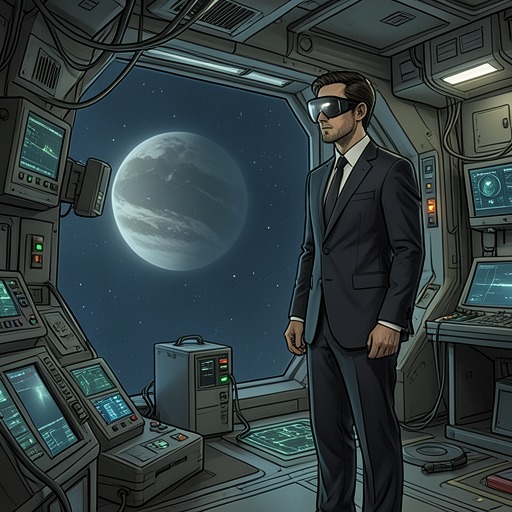
While [Magellan](entity:character-recall-character-magellan-c6acd3335cf1) carries its sleeping crew toward [Solonis B](entity:location-recall-location-solonis-b-a37c3665ab60), the ship detects a sixteen-meter metallic object floating without momentum in deep space. Its titanium-rich composition and impossible stillness prompt Magellan to wake [Allison Ridgeway](entity:character-recall-character-allison-ridgeway-6ecb44edb527), whose curiosity overrides the ship’s limited authority to alter course.
Ridgeway orders a close approach, and the object begins broadcasting an alien signal. The discovery transforms an ordinary expedition into humanity’s first credible encounter with nonhuman technology and establishes Magellan as the central vessel in the coming crisis.
Immediately after the discovery
The Artifact Reaches Magellan
Ridgeway orders [Magellan](entity:character-recall-character-magellan-c6acd3335cf1) to intercept the object and recover it into Shuttle Bay Two. The crew finds a seamless, hourglass-shaped artifact whose surface resists every conventional tool and bears several sets of unreadable inscriptions.
When Magellan’s crew reports the discovery through the [QER](entity:object-recall-object-qer-ff4b5ef0634f), [Eugene Graham](entity:character-recall-character-eugene-graham-e502ee0ea971) receives the message at [Fleet Com](entity:organization-recall-organization-fleet-com-07696f85faa4) and recognizes that the object may be nonhuman. He orders secrecy, but privately predicts that the information will leak almost immediately.
The first weeks after recovery
Earth Forms the ARTists Project
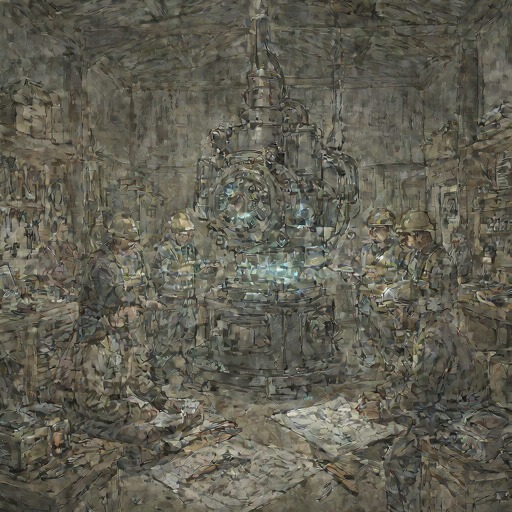
[Eugene Graham](entity:character-recall-character-eugene-graham-e502ee0ea971) assembles a clandestine research effort around the artifact, recruiting [Felix Fletcher](entity:character-recall-character-felix-fletcher-e3fcbacf4d4f) for practical reverse engineering and [Thomas Harris](entity:character-recall-character-thomas-harris-2dae2516d548) for security. [Dr. Kiefer](entity:character-recall-character-dr-kiefer-7b78df2a4318)’s [QER](entity:object-recall-object-qer-ff4b5ef0634f) technicians provide the communications infrastructure, while [Jeffery](entity:character-recall-character-jeffery-4bcfe3a8c24b) manages secrecy and administration.
The project begins as an improvised government operation with uncertain authority, but the artifact’s technical promise soon attracts political and military attention. Its researchers become known as the [ARTists](entity:character-recall-character-artists-e144fc2cb6fd), and their work begins to reshape the strategic future of humanity.
About one month after recovery
The Buoy Escapes
After [Magellan](entity:character-recall-character-magellan-c6acd3335cf1) receives orders to return to [Earth](entity:location-recall-location-earth-a6b883af9147), the artifact activates a localized repulsive-gravity effect. It damages Shuttle Bay Two, creates a hull breach, disables internal sensors, and pins objects—including [Steven Billings](entity:character-recall-character-steven-billings-3286196db5d5)—to an altered gravitational plane.
[Jacqueline Dorsett](entity:character-recall-character-jacqueline-dorsett-38806940ce4a) and [Marcel Gruber](entity:character-recall-character-marcel-gruber-cd3dc93ca406) enter the failing bay without vacuum suits and nearly die while rescuing Billings. Once the artifact falls free, it opens a circular hatch, revealing that it has reacted not to an attempt at destruction but to the ship’s departure from its assigned position.
The following weeks
The Buoy Becomes a Mystery
The crew discovers that the artifact’s signal changes after its drive shuts down, suggesting that its original transmission was a distress or maintenance message. [Felix Fletcher](entity:character-recall-character-felix-fletcher-e3fcbacf4d4f) argues that the object is a marker buoy rather than a probe: it maintained a fixed location, broadcast into empty space, and opened itself when its drive failed.
[Magellan](entity:character-recall-character-magellan-c6acd3335cf1) resumes its journey while an unseen anomaly follows it. Ridgeway alters course and detects a delayed response, proving that the anomaly is an artificial vessel rather than a sensor artifact. She sends a cautious radio hail and deletes navigational data that could expose [Earth](entity:location-recall-location-earth-a6b883af9147)’s location.
During Magellan’s return journey
The Hidden Ship Withdraws
A concealed alien vessel intercepts [Magellan](entity:character-recall-character-magellan-c6acd3335cf1)’s hail. Its commander, [Vel Noric](entity:character-recall-character-vel-noric-d3835a7397d0), learns that the humans have detected the ship and debates whether to destroy them under the Assembly’s noninterference policy.
Noric ultimately moves the vessel through a high-space portal and resumes observation from a safer position. The encounter confirms that humanity is being watched by an organized extraterrestrial civilization, even though the humans still do not know its identity or intentions.
About one year after the artifact’s recovery
The Warning Is Deciphered
The [ARTists](entity:character-recall-character-artists-e144fc2cb6fd) discover that the artifact’s inscriptions and signal layers repeat the same message in six different languages. Linguistic comparison finally produces a translation: “[Human Wildlife Preserve. Keep Out.](entity:expression-recall-expression-human-wildlife-pre-960b4fdf2499)” A second message is identified as a maintenance request.
The translation changes the political meaning of the discovery. Humanity has not merely found an alien beacon; it has encountered a boundary erected around [Earth](entity:location-recall-location-earth-a6b883af9147). The warning provokes outrage, expands the ARTists’ budget, and intensifies pressure to develop weapons and faster travel.
After the warning is translated
The Buoy Opens to Hyperspace
Felix studies the artifact’s power system and discovers inexplicable energy production, a transmitter that wastes most of its output, and a central sphere that absorbs radiation, heat, and scans without revealing an interior. [Steven Billings](entity:character-recall-character-steven-billings-3286196db5d5) drills into the sphere and finds not machinery but an apparent dimensional opening.
The opening contains a network of faster-than-light signals and records of vessels passing between dimensions. Felix names the new realm hyperspace, giving the [ARTists](entity:character-recall-character-artists-e144fc2cb6fd) the crucial insight needed to reproduce the buoy’s communications technology.
About three years after the recovery
The ARTists Leak
As research expands, the [ARTists](entity:character-recall-character-artists-e144fc2cb6fd) outsource computational work and create shell corporations to protect patents and funding. Despite security measures, internal documents are published by [Loose Lips Ezine](entity:organization-recall-organization-loose-lips-ezine-9be42cfd6ac4), exposing the project to the public and giving [Gladstone Rockwell](entity:character-recall-character-gladstone-rockwell-e74aba624467) an opportunity to demand that a military-industrial team take control.
Eugene refuses to surrender the project, arguing that [AESA](entity:organization-recall-organization-aesa-8282a2dc96ed) discovered, translated, and reverse-engineered the technology. [Danielle Fenton](entity:character-recall-character-danielle-fenton-c200e52c8364) accepts a compromise: the ARTists will retain influence while a purpose-built armed courier incorporates their hyperspace generator.
Several years after the artifact’s recovery
The First Hyperspace Window
At the North Wisconsin test facility, Felix and [Thomas Harris](entity:character-recall-character-thomas-harris-2dae2516d548) oversee humanity’s first attempt to create a stable hyperspace window. The test strains an already overloaded fusion reactor, forcing technicians to pile snow onto it as emergency cooling while Felix manually balances the unstable geometry.
The machine finally opens a stable half-meter window for nearly thirty seconds. The success proves that the [ARTists](entity:character-recall-character-artists-e144fc2cb6fd) can reproduce the alien technology, although the ruined reactor and the risks of dimensional transition show that practical travel remains far from safe.
Shortly after the first stable window test
Bucephalus Launches
The newly built [AEUS Bucephalus](entity:object-recall-object-aeus-bucephalus-8ff638e0582a) departs [Ceres](entity:location-recall-location-ceres-a497b2d6383c) under Captain [Maximus Tiberius](entity:character-recall-character-maximus-tiberius-699ca68a34b8). The heavily armored ship is openly designed as a warship despite euphemistic labels for its weapons, and its launch signals the military’s growing role in humanity’s response to the preserve.
Bucephalus accelerates toward the Unicycle for a beamed-power rendezvous, then prepares to attempt the first full-scale hyperspace transition. Felix remains responsible for the unproven drive, while Tiberius treats the mission as both a diplomatic expedition and a demonstration of force.
The launch day
Bucephalus Crosses Hyperspace
Bucephalus opens a twelve-hundred-meter hyperspace window and passes through it with the entire crew. The transition produces severe disorientation and mass vomiting because the ship’s calibration is incomplete, but the vessel survives and reemerges intact.
The successful voyage gives humanity practical faster-than-light travel. Bucephalus returns to real space near [Magellan](entity:character-recall-character-magellan-c6acd3335cf1), narrowly avoiding a collision, and the two ships form a joint expedition toward [Solonis B](entity:location-recall-location-solonis-b-a37c3665ab60) and the surrounding systems.
The first planetary survey after Bucephalus’s launch
Human Tribes Found on Solonis B
[Magellan](entity:character-recall-character-magellan-c6acd3335cf1) and Bucephalus reach [Solonis B](entity:location-recall-location-solonis-b-a37c3665ab60), where [Allison Ridgeway](entity:character-recall-character-allison-ridgeway-6ecb44edb527) leads a survey team to the surface. The explorers discover the Pirikura, a human society speaking a language descended from an Amazonian tribe believed extinct on [Earth](entity:location-recall-location-earth-a6b883af9147).
The finding proves that the [Human Wildlife Preserve](entity:location-recall-location-human-wildlife-prese-48ac95de5889) is not merely a boundary around humanity. Earth’s people have been abducted, transported, and maintained in isolated planetary experiments. The revelation turns first contact into a question of historical crime and responsibility.
During the Solonis B survey
Felix Is Kidnapped
Felix ventures away from the Pirikura village and is captured by a silent, spotted tribe that wears human ears as ornaments. He awakens naked and bound in a cave, where the tribesmen prepare to cook him and execute one of their own after he makes too much noise.
[Harris](entity:character-recall-character-harris-0bf653ec3182) leads a marine rescue through the cave system, using implanted communications, adaptive camouflage, and a flash-bang assault. Felix is freed, but the encounter reveals that [Solonis B](entity:location-recall-location-solonis-b-a37c3665ab60) contains multiple human cultures, some of which have developed lethal traditions around alien observation sites.
Immediately after Felix’s rescue
The Observation Post Revealed
Felix identifies a hidden door behind the cave wall and persuades Ridgeway’s team to cut through it. Beyond the entrance lies an illuminated observation station filled with views of the Pirikura village, rows of nursery beds, and unsettling android caretakers.
The station confirms that the human settlements are controlled anthropological experiments rather than accidental colonies. The explorers recover equipment and data, but Ridgeway refuses to treat the Pirikura as cargo to be rescued, recognizing that removing them would constitute another abduction.
After the human expedition leaves Solonis B
Culpus-Alam Is Destroyed
While the human ships depart, Ver Norik's Turambar cruiser remains near the planet. Noric orders an operation designed to make the humans appear responsible for geocide, and a vast hyperspace state portal bores through Culpus-Alam, destroying its crust, atmosphere, and human populations
After leaving Solonis B
The Twinkling Star Survey
[Magellan](entity:character-recall-character-magellan-c6acd3335cf1) and Bucephalus travel to the [Twinkling Star](entity:location-recall-location-twinkling-star-e2c6fdb18aa6), where they encounter enormous orbital membranes that have dimmed the system's sun. The inner planet is frozen, and D'Armic later explains that the membranes—self-replicating solar machines—were deployed by the Ok
At the Twinkling Star system
First Contact with D’armic
[D’armic](entity:character-recall-character-d-armic-dfa8eb2a5206) intercepts the human ships and accuses them of destroying Culpus-Alam. His EM pulse cannon fails to pacify the crews, whose ingrained aggression proves stronger than the weapon’s emotional manipulation.
Ridgeway and D’armic compare their evidence and realize that both are being manipulated. D’armic boards [Magellan](entity:character-recall-character-magellan-c6acd3335cf1), reviews its sensor records, and accepts that the human ships could not have created the portal that destroyed the planet. The hostile accusation becomes the first sustained diplomatic exchange between humanity and galactic civilization.
Immediately after the first-contact dispute
D’armic Joins the Expedition
[D’armic](entity:character-recall-character-d-armic-dfa8eb2a5206) explains that the Assembly of Sentient Species investigates geocide and that he must return to its headquarters to report his findings. His cutter is damaged or destroyed in the subsequent confrontation, leaving him dependent on the humans for transport.
Ridgeway negotiates to keep the alien buoy, arguing that the humans have already absorbed its technology and that surrendering it would not undo the contamination of their development. D’armic agrees to report the buoy as unsalvageable, while the human ships begin treating him as an ally and witness.
The next survey system after the Twinkling Star
Turemok Attacks at Kulla
At [P3X117-e](entity:location-recall-location-p3x117-e-8882f2973d70) and [Kulla](entity:location-recall-location-kulla-8fc6da66ebbf), the expedition lands on the wrong planet, an abandoned tourist world, while the [Turemok military](entity:organization-recall-organization-turemok-military-61c11b53bfe7) follows them through hyperspace. A hidden [Turemok](entity:creature-recall-creature-turemok-848e8ac358c5) force sends a drop-ship against the surface survey teams.
The attack reveals that the Turemok are willing to frame humanity for multiple planetary destructions. Their stealth systems initially neutralize the human sensors, but [Harris](entity:character-recall-character-harris-0bf653ec3182)’s marines improvise a defense while Bucephalus and [Magellan](entity:character-recall-character-magellan-c6acd3335cf1) prepare for an orbital battle.
During the Kulla operation
The Ground Team Defeats the Landing Force
Zek’nel’s [Turemok](entity:creature-recall-creature-turemok-848e8ac358c5) landing force surrounds Ridgeway’s survey party and demands surrender. [Harris](entity:character-recall-character-harris-0bf653ec3182) requests permission to fire, and Ridgeway finally orders the marines to engage when the aliens begin maneuvering to flank them.
The humans use sniper fire, paint rounds, reflective drones, and an orbital Gargoyle platform to destroy or incapacitate the landing force. The victory costs several lives, including the sniper team and shuttle pilot Simmons, but it prevents the Turemok from capturing the surface party immediately.
Immediately after the ground battle
The Turemok Capture the Fleet
[Vel Noric](entity:character-recall-character-vel-noric-d3835a7397d0) opens a hyperspace tunnel through [Kulla](entity:location-recall-location-kulla-8fc6da66ebbf), beginning the same planet-killing maneuver used against Culpus-Alam. The humans barely survive the shock wave, but the cruiser then disables Bucephalus and captures both ships’ crews.
The attack demonstrates that Noric’s objective is not arrest but political manipulation. By destroying Kulla and holding the humans responsible, he intends to justify punitive action against [Earth](entity:location-recall-location-earth-a6b883af9147) under the Treaty of [Pu’Lan](entity:creature-recall-creature-pu-lan-947f42340427).
Aboard the Turemok cruiser
The Prisoners Escape
The captured humans are taken to an interrogation room with [D’armic](entity:character-recall-character-d-armic-dfa8eb2a5206), who has also been imprisoned under suspicion of collaboration. Felix proposes pretending that humans cannot see in the ship’s lighting, enabling the group to exploit the [Turemok](entity:creature-recall-creature-turemok-848e8ac358c5)’s assumptions.
Maximus uses a [Niven light](entity:object-recall-object-niven-light-969841ef47ae) as an improvised cutting weapon, killing [Vel Noric](entity:character-recall-character-vel-noric-d3835a7397d0) and several guards. The prisoners recover their equipment and begin moving toward the hangar, while D’armic’s fear drug complicates the escape and Felix becomes separated from the group while rescuing [Jacqueline](entity:character-recall-character-jacqueline-7f3dd975e9d4).
During the same escape
Magellan Is Retaken
Ridgeway returns to [Magellan](entity:character-recall-character-magellan-c6acd3335cf1) with [Harris](entity:character-recall-character-harris-0bf653ec3182)’s marines and finds [Steven Billings](entity:character-recall-character-steven-billings-3286196db5d5) already controlling the ship’s internal systems. Billings has avoided capture by faking a radiation emergency and then used alarms to herd the [Turemok](entity:creature-recall-creature-turemok-848e8ac358c5) boarding party into a cargo bay.
The crew seals the intruders inside and restores control of Magellan. Maximus then launches Bucephalus’s remaining missiles against the Turemok cruiser, with Magellan’s AI taking over targeting for missiles that lost their original telemetry.
Immediately after Magellan is retaken
The Turemok Cruiser Is Destroyed
Bucephalus and [Magellan](entity:character-recall-character-magellan-c6acd3335cf1) coordinate a mass missile strike against the [Turemok](entity:creature-recall-creature-turemok-848e8ac358c5) cruiser. The cruiser’s hyperspace point-defense portals intercept many warheads, but its capacitors cannot absorb the full swarm.
Hundreds of thermonuclear warheads destroy the cruiser and kill its crew, including the newly promoted J’quol. The victory saves the human expedition, but it also leaves the truth of the planetary attacks politically vulnerable because the principal Turemok witnesses and physical evidence are gone.
During the human expedition’s return to Earth
The Assembly Punitive Expedition
The [Turemok](entity:creature-recall-creature-turemok-848e8ac358c5) leadership uses the destruction of Culpus-Alam, [Okim](entity:location-recall-location-okim-5bd593e6d8a9), and [Kulla](entity:location-recall-location-kulla-8fc6da66ebbf) to obtain authorization for an expedition against [Earth](entity:location-recall-location-earth-a6b883af9147) under the Treaty of [Pu’Lan](entity:creature-recall-creature-pu-lan-947f42340427). The brothers Jak’el and [Grote](entity:character-recall-character-grote-77dea408f950) manipulate the crisis from within the Assembly’s power structure, seeking to strengthen Turemok dominance.
The punitive fleet is dispatched before the humans can reach the Assembly and present evidence. Its mission is to destroy Earth and impose long-term sequestration on the colonies, turning the political conspiracy into an imminent existential threat.
After the Turemok cruiser’s destruction
The Pillar Is Reached
[Magellan](entity:character-recall-character-magellan-c6acd3335cf1), Bucephalus, and [D’armic](entity:character-recall-character-d-armic-dfa8eb2a5206) travel to the Ulamante system, where thousands of ships surround the Assembly’s headquarters. The humans pass through security and transfer to the [Pillar](entity:object-recall-object-pillar-33484d42bd2c), a colossal structure joining two worlds and preventing their collision.
The Pillar embodies the Assembly’s collective engineering achievement and its political authority. Its scale forces the humans to confront how far behind the established galactic civilizations they remain, even as their recent victories have made them impossible to ignore.
At the Pillar
The Assembly Hearing
Allison, Maximus, [Harris](entity:character-recall-character-harris-0bf653ec3182), Felix, and [D’armic](entity:character-recall-character-d-armic-dfa8eb2a5206) appear before the Assembly’s six representatives. [Ruckk](entity:character-recall-character-ruckk-f88c730f6560) presents the humans as convicted pirates and serial geocides, while D’armic argues that the human ships lack the power to create the massive portals that destroyed the planets.
The Assembly agrees to investigate the physical evidence but refuses to halt the punitive expedition because the attack fleet is already too close to [Earth](entity:location-recall-location-earth-a6b883af9147). The hearing therefore becomes both a partial vindication and a race against the approaching [Xecoron](entity:object-recall-object-xecoron-88d4569bda68).
During the Pillar hearing
Felix Warns Earth
Felix realizes that the Assembly’s ships do not know about the [QER](entity:object-recall-object-qer-ff4b5ef0634f) system and that [Earth](entity:location-recall-location-earth-a6b883af9147)’s only immediate defense is the Unicycle, a giant particle accelerator near Earth. Allison sends Felix back through the transfer system to warn [Eugene Graham](entity:character-recall-character-eugene-graham-e502ee0ea971).
Felix and [Jacqueline](entity:character-recall-character-jacqueline-7f3dd975e9d4) escape the transfer station in a shuttle, and Felix explains that the Unicycle can act as a point-blank particle cannon against a ship near Earth. The insight gives the isolated Earth a narrow chance to defeat the punitive expedition.
Shortly before the Xecoron reaches Earth
The QER Cult Takes Over
Eugene reaches the [QER Center](entity:organization-recall-organization-qer-center-6bc05fee061e) and discovers that [Dr. Kiefer](entity:character-recall-character-dr-kiefer-7b78df2a4318) and his followers have formed a buoy-centered cult. They tie Eugene to the equipment racks and attempt to prevent him from contacting the Unicycle, believing that the coming disaster will inaugurate their [Day of Due Consideration](entity:expression-recall-expression-day-of-due-conside-9ad07d0f74c5).
The cult’s psychological researcher refuses to intervene until Eugene convinces her that the entire world will die if he remains restrained. The battle android’s bored operator, Specialist Balog, finally responds to Eugene’s calls and helps suppress the cult.
Minutes before the attack
Eugene Regains the Unicycle
After being freed, Eugene reaches [Renée Lemieux](entity:character-recall-character-ren-e-lemieux-4c613d84eefa) at the Unicycle and explains that a stealthy [Turemok](entity:creature-recall-creature-turemok-848e8ac358c5) warship will emerge near [Earth](entity:location-recall-location-earth-a6b883af9147). Ground sensor feeds are routed through [QER](entity:object-recall-object-qer-ff4b5ef0634f) to compensate for the enemy’s concealment, while the accelerator’s targeting safeguards are deliberately disabled.
Renée prepares the Unicycle’s full particle beam and waits for the [Xecoron](entity:object-recall-object-xecoron-88d4569bda68) to reveal its portal signature. The Earth defense depends on a single shot from a machine built for controlled propulsion support rather than planetary defense.
The same night
The Xecoron Attacks Earth
The [Xecoron](entity:object-recall-object-xecoron-88d4569bda68) emerges near [Earth](entity:location-recall-location-earth-a6b883af9147) under the command of Jak’el and [Grote](entity:character-recall-character-grote-77dea408f950), who intend to destroy the planet and eliminate humanity as a rival. Its crew begins opening the attack portal while the Unicycle struggles to locate the stealth-protected vessel.
As the portal signature appears, Renée uploads the targeting coordinates and fires the Unicycle’s thirty-two-terawatt beam. The particle stream vaporizes the Xecoron and its crew before the planned planetary attack can begin.
Immediately after the Xecoron’s destruction
Earth Survives
Eugene reports the enemy’s destruction to [Magellan](entity:character-recall-character-magellan-c6acd3335cf1), ending the crews’ hours of uncertainty. The [Earth](entity:location-recall-location-earth-a6b883af9147), its habitats, and its colonies survive because the Unicycle’s beam defeats the attack at close range.
The victory confirms that humanity can exploit its own industrial infrastructure as a weapon, but it also exposes the danger of the Earth’s technological acceleration. The Assembly’s punitive judgment has failed, yet humanity is now fully entangled in galactic politics.
After the crisis
The Assembly Weakens Turemok Power
The destruction of the [Xecoron](entity:object-recall-object-xecoron-88d4569bda68) and the earlier loss of Noric’s cruiser undermine the [Turemok military](entity:organization-recall-organization-turemok-military-61c11b53bfe7)’s reputation. [D’armic](entity:character-recall-character-d-armic-dfa8eb2a5206) explains that the Assembly is unlikely to punish the conspirators openly because the strongest evidence and witnesses have been lost.
Nevertheless, public confidence in the [Turemok](entity:creature-recall-creature-turemok-848e8ac358c5) collapses, and the Assembly begins discussing the end of their monopoly over military and police forces. Humanity survives, but the political consequences of the conflict remain unresolved.
After the crisis
Magellan Returns Home
The survivors return toward [Earth](entity:location-recall-location-earth-a6b883af9147), carrying evidence, recovered technology, and [D’armic](entity:character-recall-character-d-armic-dfa8eb2a5206) as the first official ambassador from the Assembly. [Magellan](entity:character-recall-character-magellan-c6acd3335cf1) receives an android avatar based on a salvaged human analogue while the original ship undergoes refitting in orbit.
The arrangement gives Magellan a physical presence at Eugene’s welcome dinner and symbolizes the ship’s transition from isolated expeditionary machine to a conscious participant in humanity’s new diplomatic era.
The ending
The Survivors Celebrate
Eugene hosts Allison, Felix, [Harris](entity:character-recall-character-harris-0bf653ec3182), [Jeffery](entity:character-recall-character-jeffery-4bcfe3a8c24b), [Jacqueline](entity:character-recall-character-jacqueline-7f3dd975e9d4), [D’armic](entity:character-recall-character-d-armic-dfa8eb2a5206), [Magellan](entity:character-recall-character-magellan-c6acd3335cf1)’s avatar, and Maximus for a celebratory dinner. The guests honor the dead, including Tillman, Lyska, Simmons, and the lost human communities of [Solonis B](entity:location-recall-location-solonis-b-a37c3665ab60).
Felix and Jacqueline’s relationship becomes openly romantic, while Jeffery and Harris continue their partnership. D’armic drinks the Pirikura’s impossibly potent berry liquor and experiences genuine emotion for the first time without medication, ending the novel with a smile that represents the possibility of change across species.